

Cargo Pilot as a orchestration solution
Enable adaptation to changing requirements quickly
Cargo Pilot: Delivery Orchestration for Modern Commerce
The logistics landscape has changed. Large businesses no longer operate with a single carrier, one sales channel, or a straightforward fulfillment process. They juggle multiple eCommerce platforms, point-of-sale systems, accounting software, and a patchwork of regional and international carriers. Managing these moving parts manually is expensive, error-prone, and unsustainable at scale.
Cargo Pilot addresses this complexity not by replacing existing systems, but by connecting them. At its core, Cargo Pilot is a delivery orchestration platform that sits at the centre of your operations, aggregating data from disparate sources and automating the workflows that tie them together.
Beyond Traditional Dispatch Software
Traditional dispatch and shipping software focuses on a narrow problem: getting packages from A to B. Cargo Pilot takes a broader view. It treats fulfillment as one component of a larger operational ecosystem that includes order management, inventory reconciliation, supplier coordination, billing, and customer communication.
This distinction matters. When an order arrives from Shopify, it doesn't exist in isolation. Stock levels need updating. Invoices need generating. The right carrier needs selecting based on cost, speed, or geographic coverage. Customers expect tracking updates. With Cargo Pilot, these aren't separate tasks requiring separate tools. They're automated sequences triggered by a single event.
Event-Driven Architecture
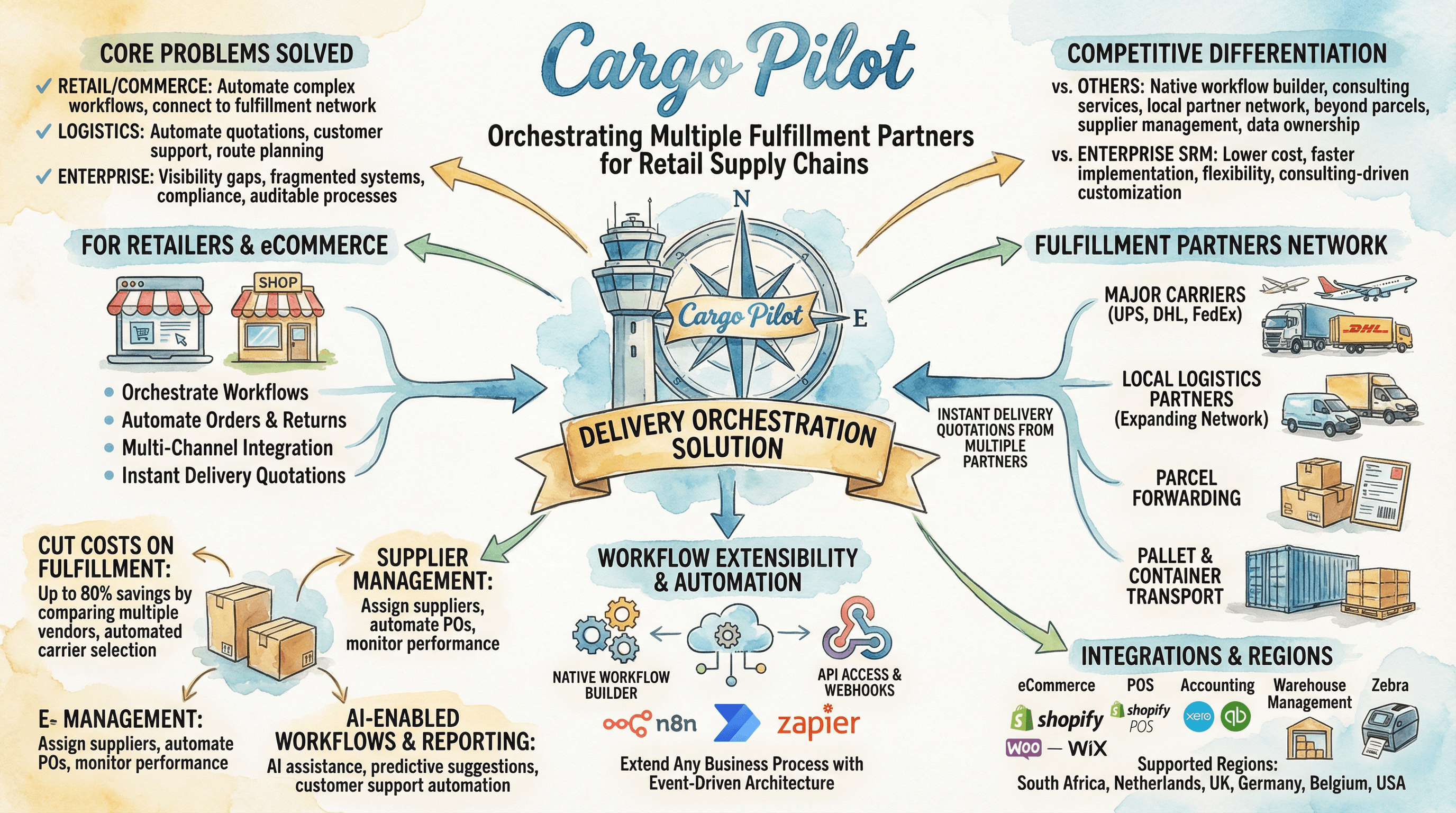
What makes Cargo Pilot genuinely flexible is its event-driven architecture. Every action within the platform (an order received, a shipment dispatched, a return requested) publishes an event that can trigger downstream workflows.
This opens the door to powerful automation. A retailer might configure a workflow that automatically generates a purchase order when stock falls below a threshold, sends it to the appropriate supplier, and notifies the procurement team via Slack. A logistics company might build a process that compares rates across carriers in real-time and selects the most cost-effective option without manual intervention.
For businesses with requirements that go beyond out-of-the-box functionality, Cargo Pilot integrates natively with workflow platforms like N8N, Power Automate, and Zapier. This means custom logic, conditional branching, and AI-enabled processes are all within reach without writing code or waiting on vendor roadmaps.
A Growing Carrier Network
Cargo Pilot integrates with major international carriers like DHL, FedEx, and DPD, but it also recognises that the best delivery option isn't always the biggest name. The platform supports onboarding regional and local logistics partners, giving businesses access to competitive rates and coverage that global carriers often can't match.
This network approach turns carrier selection from a constraint into a competitive advantage. Businesses can route same-day deliveries through a local courier while using international carriers for cross-border shipments, all managed from a single dashboard.
Who Benefits
Cargo Pilot serves businesses across the logistics, retail, and eCommerce sectors. For online retailers, it automates order processing, returns handling, and multi-channel consolidation. For brick-and-mortar operations, it manages stock transfers between locations and coordinates bulk deliveries. For logistics companies themselves, it provides tools to generate quotations, manage rate cards, and capture leads from retailers seeking delivery partners.
Larger enterprises benefit from centralised visibility across locations, suppliers, and carriers, along with compliance features for multi-jurisdiction tax handling and audit-ready reporting.
The Bottom Line
Cargo Pilot isn't trying to be everything to everyone. It's built around a specific thesis: that modern commerce requires orchestration, not just software. By connecting the systems businesses already use and automating the workflows between them, Cargo Pilot reduces manual effort, cuts fulfilment costs, and gives operations teams the visibility they need to make better decisions.
For businesses tired of stitching together point solutions or constrained by rigid enterprise platforms, Cargo Pilot offers a middle path. It's flexible enough to adapt to how you work and robust enough to scale with you.